
We are very lucky in Dar es Salaam to have such a wide variety of fresh, local, healthy food available to us all year round. Let’s make the most of it!
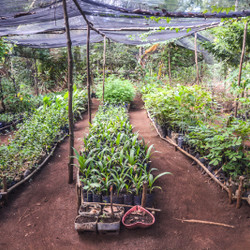
Grow your own! If you have some garden space, try growing your some of your own food using the permaculture approach. You can learn more about permaculture in permaculture courses available in Dar es Salaam and Zanzibar from the Practical Permaculture Institutes of East Africa. Do not use artificial fertiliser, as the manufacture of artificial nitrogen fertiliser uses a lot of energy usually from fossil fuels. Do not use pesticides as they pollute the local environment and kill valuable organisms as well as the pests they target. Permaculture methods offer much better ways of keeping your soil and plants healthy. If you have a large natural garden, you can also raise chickens – the chickens can feed themselves on insects and vegetation from your garden, give you very nutritious eggs, and fertilise your soil!
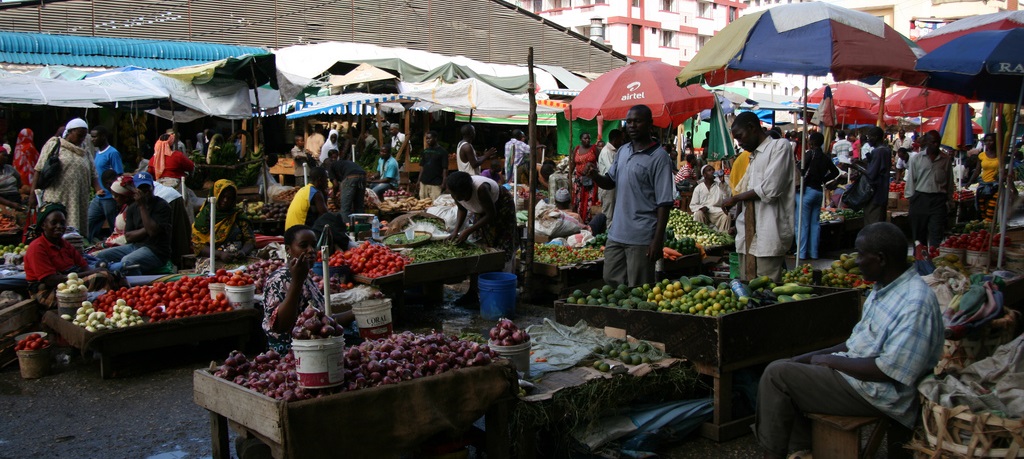
Buy local. Avoid food which has been imported, especially food which has travelled thousands of kilometres to get to Dar. The further the food has travelled, the more carbon dioxide is likely to have been emitted by the vehicles transporting it. Plus it is good to support local Tanzanian farmers. When buying food at local markets, ask the sellers where it came from, and tell them you like to buy local!
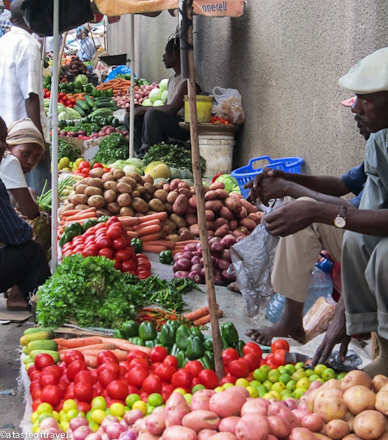
The less processing the better. Processing of food usually takes energy and that energy often comes from burning fossil fuels. Besides, the less processed the food the healthier it is!
The less cooking needed, the better. We all eat cooked foods of course, but if you can fill up your diet with more raw foods and less cooked foods, that reduces cooking, which usually involves either burning fossil fuels (gas) or deforestation (wood charcoal). See below for some wonderful local raw foods available in Dar!
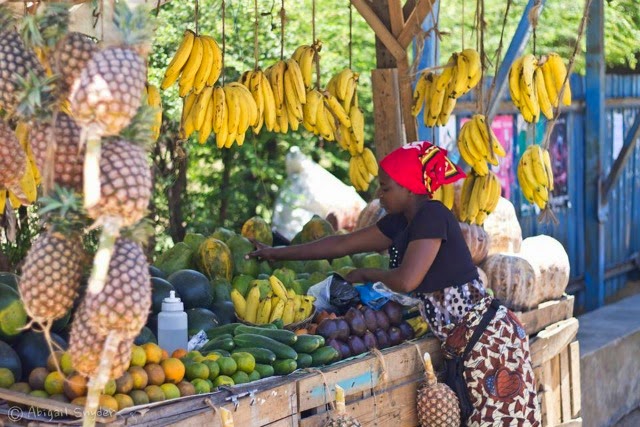
Minimise packaging
Plastic carrier bags have been banned by the Government, but shops are still giving out other types of disposable bags and paper bags. If you bring cloth bags and some tupperware/lunch boxes with you every day as part of your daily routine, there is no need to take bags at shops and markets and then throw them away. You can reuse the same baskets or cloth bags for large dry items, and the same tupperware for small or wet items (eg fish, peas, sugar, nuts), for years and years !
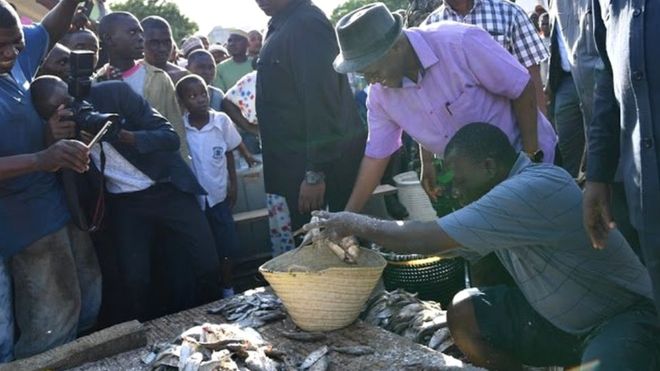
Some food comes pre-packaged and some food doesn’t. Try to find “nude food”, such as the food available in the wonderful open air markets in Dar es Salaam. Supermarkets and take-aways often unnecessarily package food which has no need to be packaged. Avoid especially styrofoam which has a terrible way of finding its way onto our beaches and into the sea. If you have to get packaged food, then go for food which is packaged in paper and not plastic.
Go organic
Organic agriculture is a way of producing food which does not use harmful or energy intensive chemicals. There are certification schemes to check if food has been produced organically. For more information about organic agriculture in Tanzania visit Tanzania Organic Agriculture Movement. Wild Flour Café in Masaki sells local certified organic food and also runs an organic food box delivery service – you can order via the Wild Flour App on android/IOS, or contact them on karibu@wildflour.co.tz / 0763492848.
.
Wonder foods !
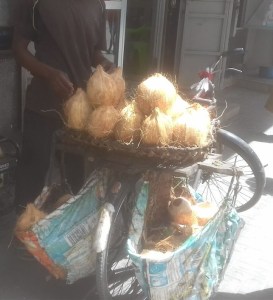
Coconut bought from a seller on a bicycle ! Either as “Maji ya madafu” or “nazi”. It normally comes from very close to Dar es Salaam, it is transported by bicycle, it has 100% natural packaging, has not been processed in any way, and does not need to be cooked! Wow, what a wonder food/drink!
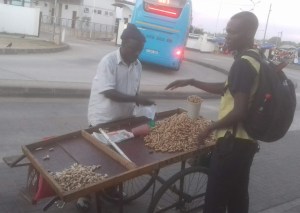
Raw peanuts – peanuts are grown locally, do not need to be cooked, and give you protein! Ask the peanut seller which nuts are roasted/boiled and which ones are raw “mbichi” – both are available, go for raw if you can, and fill up your cloth bag, basket or tupperware!
Honey – you can get raw Tanzanian honey in your own refillable container from Abdulshakur Ayoob – 0756 444 350.
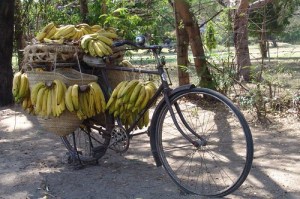
Local fresh fruit, vegetables, herbs and spices – particularly the ones which can be eaten raw – the list is so long here! Just go to a local open-air vegetable and fruit market and try it all ! The market in Zanaki street in the city centre is a special recommendation! For example, bananas and avacados give you energy, tomatoes and all the wonderful citrus fruits give you plenty of vitamins, raw carrot and raw peas are wonderful, delicious and healthy foods! Improve your health and flavour your food with the large variety of herbs, spices, ginger, moringa… all grown locally and available without packaging. Start a conversation with the sellers about where the food comes from and tell them you prefer local and organic!
Other good foods
Energy foods
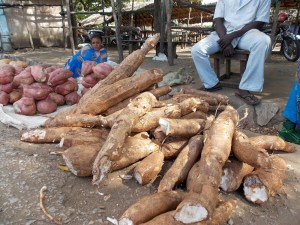
Potatoes, plantain bananas, cassava, local corn/maize, ugali and millet (eg ulezi porridge) are probably the best sources of energy in Tanzania from an environmental viewpoint. Potatoes, plantain and cassava can be cooked in a pressure cooker, reducing fuel use.
Bread is produced using mostly imported wheat and often comes in plastic. Some pasta is now produced in Tanzania, although it is produced using mostly imported wheat, you can’t get it without plastic and it is pre-processed which uses energy. Most corn is Tanzanian (corn-on-the-cob, cornflour). Corn suitable for popcorn is often all the way from America produced using damaging methods – however it is possible to get the rarer Tanzanian popcorn kernels if you ask at markets. Rice is unfortunately a source of methane emissions from rice paddies, so try to cut down on rice and increase the potatoes, plantain, cassava, ugali, local corn/maize and ulezi! And if you do buy rice, try to get local Tanzanian rice, Morogoro rice being the closest to Dar es Salaam.
Protein foods
These are listed roughly in order of environmental preference – eat more of the top ones and less of the bottom ones!
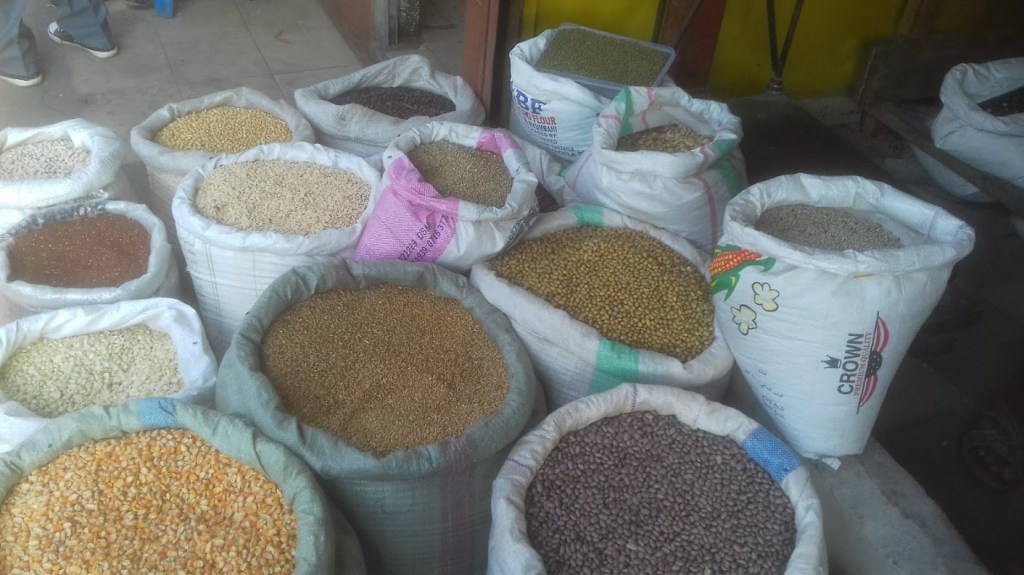
Peas and beans are good sources of protein, are available locally and usually available in markets without packaging. There are a variety of different types of local beans available – try them all! Some beans do take a lot of fuel to cook – try to minimize this by soaking them overnight before you cook, and see the cooking section of this guide for how to reduce your cooking environmental impact.
Cashew nuts have the advantage of being local from Lindi and Mtwara regions, but the disadvantage of requiring heat and fuel to de-shell them before they are sold.
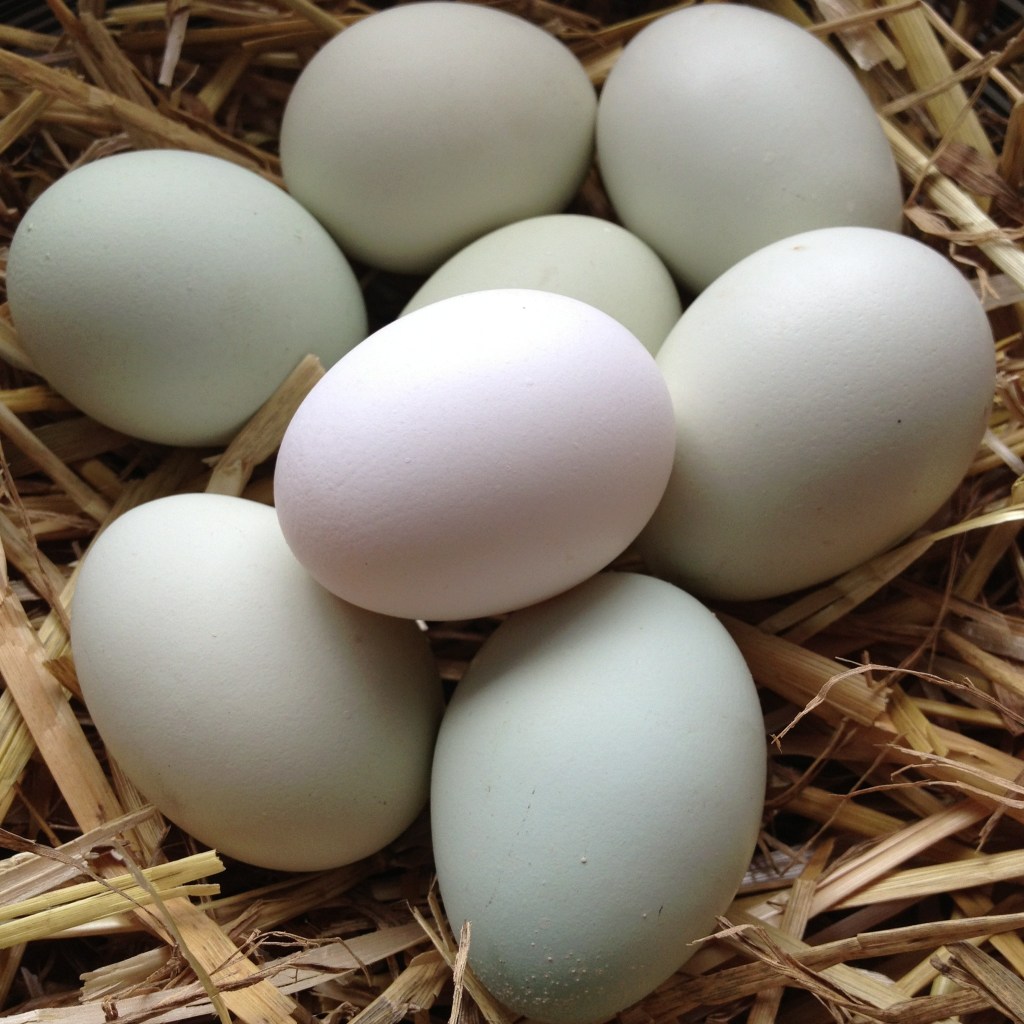
Eggs are a good source of protein, and are available locally and often without packaging. Eggs from free range chickens who have eaten mostly insects from the ground and food scraps are the best for your health and for the environment, and are widely available – ask for “mayai ya kuku wa kienyeji”! Re-use your egg trays !
Fish, if it has been caught without dynamite fishing and by local fisherfolk in quantities that are sustainable, is a good source of protein. The main climate impact of fish is the fuel used by fishing boats. Dynamite fishing is against the law in Tanzania but unfortunately still happens – it destroys coral habitats and kills many more fish than are actually harvested.
Meat is less environmentally friendly than other foods because the same resources (land, energy and other resources) produce less protein for people if they are used to grow animal feed for animals which people eat as meat, than if the same resources are used to grow plant-based food directly for people.
Chicken is not as bad for the environment as other meat, however it depends on what the chicken is fed with. See Biobuu for a new environmentally friendly way to feed chickens in Tanzania, although it is difficult to know what your chicken has been fed with.
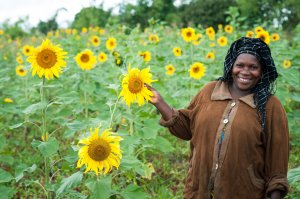
Cooking oil – buy sunflower oil not palm oil! Sunflower oil is produced in Tanzania and can be bought in large buckets, and you can then re-use the buckets afterwards. Never buy a bucket on its own – buy a bucket of sunflower oil instead!
Not so good foods
Palm oil (which unfortunately is the cheapest cooking oil in Dar) is very problematic environmentally, for many reasons. Palm oil is imported long distances (only the refining is done in Tanzania). Most palm oil comes from palm oil plantations in places like Malaysia and Indonesia where huge areas of the world’s tropical rainforest continue to be cut down every day to produce palm oil.
Diary products such as milk, yoghurt, cheese and icecream all have the negative impact of increasing methane emissions from cows or goats. Some people choose to avoid them completely – do this if you can. However, if you do eat diary products, it is possible in some parts of Dar to get milk from local cows in the Dar es Salaam region in refillable containers. You could experiment with making your own yoghurt instead of buying it in the small hard-plastic disposable containers it comes in. Keep in mind that cheese has a lot of shortcomings environmentally – it is usually imported from far away places such as Ireland and New Zealand, it takes large quantities of milk and therefore methane emissions to make a small quantity of cheese, and of course it is a processed food.
Meat from ruminant animals eg cows and goats, emits a lot of methane due to the digestive process of these animals. Beef production can also be a cause of deforestation if cattle graze on land where trees were cut down to allow grazing, and cows emit more methane than goats. Avoid beef and goat meat, especially beef, or reduce your quantities and frequency of eating it!
What you drink
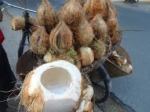
Coconut water (maji ya madafu) is Dar es Salaam’s best wonder-drink! Healthy, local, transported by bicycle, natural packaging and generally environmentally friendly!
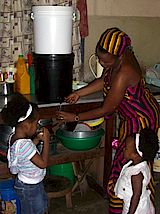
Most people will not drink unfiltered water from the tap in Dar es Salaam for safety reasons. The most environmentally friendly option is to filter your tap water and drink that.
A second-best alternative is to buy the water-dispenser bottles and return them – you can make a home made water dispenser using a bucket and a tap at the bottom – a fundi can make it for you. Try to avoid buying disposable plastic bottles of water!
Fresh local juices served in washable glasses, or collected from your local juice vendor in your own refillable bottle, are preferable to processed juices from disposable plastic-lined cartons. Remember to ask to not have a disposable plastic straw in your drink at a bar/restaurant (and explain why when you get a puzzled look)!
If you drink sodas or alcohol, buy in returnable glass bottles. Plastic bottles are single-use, and even worse are blue or brown plastic bottles which cannot even be recycled. Aluminum cans require a lot of energy, often from burning fossil fuels, to produce, and cannot be re-used. You may invest in some glass soda/beer bottles to keep at home and bring them to a local bar for refilling. Keep in mind that single-use glass bottles (eg wine bottles) are bad environmentally due to the large amount of energy (usually from fossil fuels) needed to produce glass for a single use. Cartons of wine are preferable to single-use glass.

Developed by Elaine in 2019. Contact me on Mastodon if you’d like to help update this website mastodon.ie/@ElaineActivism . If you don’t have a Mastodon account, you can join here mastodon.social
 Kijanisha Dar ! - Dar Green Guide